What’s your electrical business worth? Value it in 90 seconds.
Electrical businesses are typically priced on one of two earnings figures depending on size: Seller's Discretionary Earnings (SDE) below roughly $1M, and EBITDA above. Applied to electrical specifically, the base multiple ranges are 2.5x–3.75x SDE and 4x–6.5x EBITDA. Where inside that range your business trades is decided by a handful of specific, buyer-visible factors.
Every input stays in your browser. The tool benchmarks each KPI against real Main Street peers in your industry, layers per-KPI multiple lifts on top of the category baseline, and shows a live range with the reasons behind it.
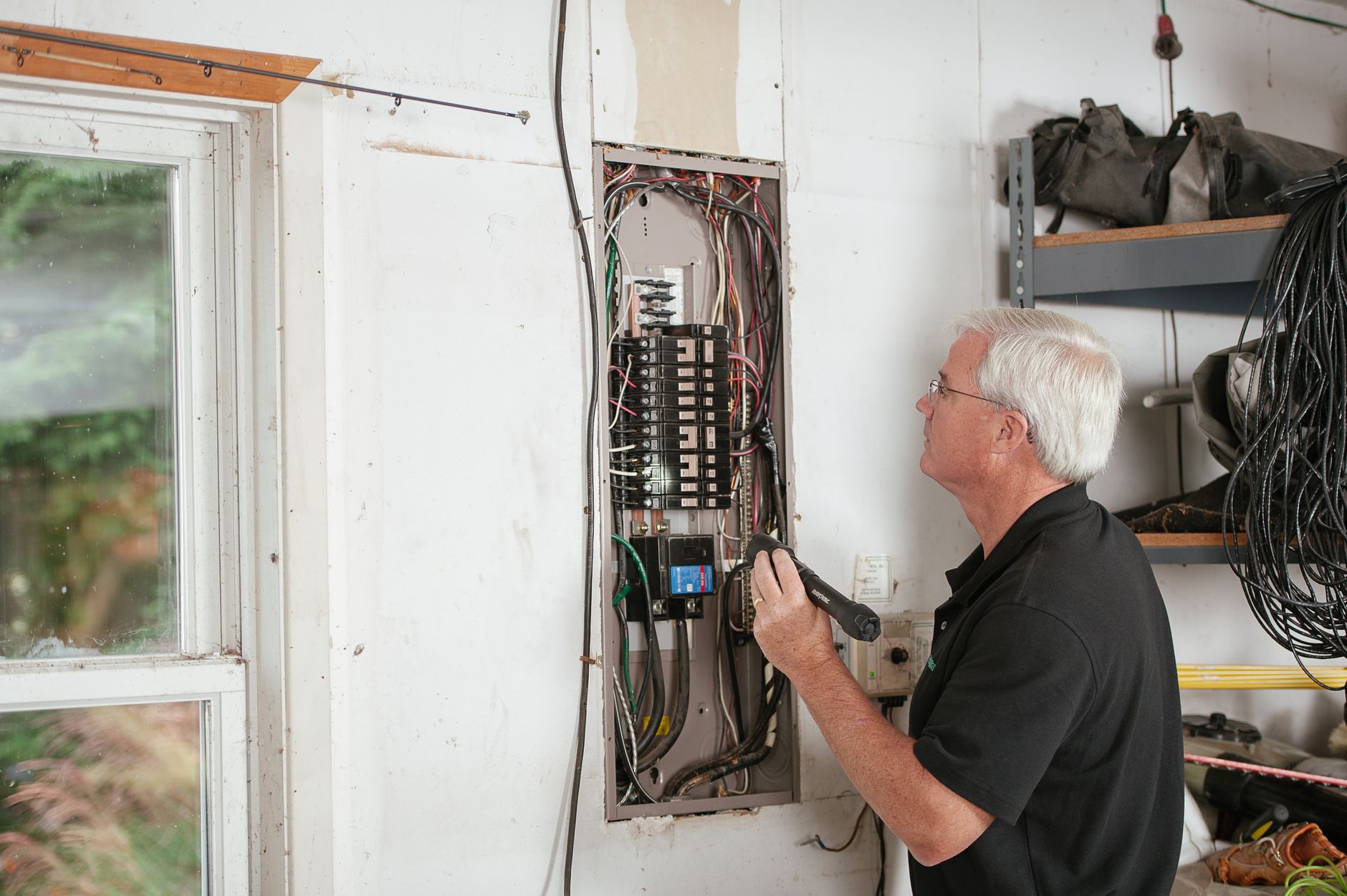
Licensed residential-and-light-commercial electrical contractors with recurring service revenue are the sweet spot for both PE-backed platforms and self-funded searchers. Multi-trade platforms (HVAC + plumbing + electrical) are aggressively acquiring in top Sun Belt metros, and standalone electrical roll-ups have started to emerge.
What’s your electrical business worth?
Enter the numbers that actually drive electrical valuations. We benchmark each against real Main Street peers and show you where you land.
What moves the multiple
The metrics buyers actually diligence in electrical.
Category baseline is 2.5x–3.75x SDE (below ~$1M SDE) transitioning to 4x–6.5x EBITDA above. Where inside that range a specific electrical business trades is decided by these operating metrics — the same ones a professional QoE surfaces on day one of diligence.
Licensed electricians on staff
Buyers underwrite the licensed labor pool. Loss of a master electrician before close can materially reduce price.
Service vs project mix
Steady service revenue trades at premium multiples versus project-based revenue with lumpier cash flows.
License transferability
State-specific — some licenses transfer only with the master electrician on staff. This is a diligence gate, not a nice-to-have.
Deal structure norms
How electrical deals actually close.
License-transfer clauses drive the timing of many electrical deals. Most sub-$3M-revenue closes are SBA-financed with the master electrician on a 12-month consulting agreement post-close. Multi-trade platform buyers typically want to combine the acquisition with existing HVAC or plumbing operators in the same metro.
Recurring-revenue anchor for electrical: 25% of revenue is the threshold that meaningfully lifts multiples. Businesses below that trade nearer the baseline low; above it, buyers underwrite at the top of the range.
Related tools — same industry
Take the numbers further.
Each tool below reads your industry from the URL and pre-seeds the input. No signup.
Sellability score
100-point readiness diagnostic — financials, management, concentration, structure, dependence.
Open toolPredict my buyer
Probability across the five buyer types (Individual, Strategic, Search Fund, PE Consolidator, PE Platform).
Open toolWho buys businesses like mine?
Named active acquirers in your category and the size ranges they underwrite.
Open toolNet proceeds after taxes
Headline price → cash at close after taxes, fees, and seller-note timing.
Open toolNext up
The full electrical sell playbook.
Prep priorities, timing signals, active acquirers, deal structure, and closing — the practitioner playbook specific to electrical deals.
People also ask
Valuing a electrical business.
How is my electrical business valued?
Electrical service businesses trade at SDE multiples of 2.5–3.75x for owner-operator businesses below $1M SDE. Above $1M EBITDA, expect 4.0–6.5x — the top end reserved for operators with commercial service contracts, a licensed staff, and recurring service agreements.How does licensing affect an electrical business sale?
Materially. State-specific rules determine whether the business's license transfers to a buyer automatically or whether a qualifying master electrician must remain on staff. This is often the deal's critical path — verify with your state's licensing board before signing a purchase agreement.Do commercial electrical operators sell for more?
Commercial-heavy operations typically command modest premiums because of longer customer relationships and higher gross margins, but the highest multiples in the category still go to operators with recurring service-agreement penetration above 25%.How accurate is this electrical valuation estimate?
It's an initial diagnostic, not a formal appraisal. The engine uses baseline 2.5x–3.75x SDE / 4x–6.5x EBITDA multiples from published Main Street M&A data, then layers per-KPI adjustments using P25–P90 industry benchmarks. What it can't see is qualitative signal — customer-relationship durability, management-team quality, regulatory risk in your niche. Use it to see where your business lands against peers, then let a specialist broker validate against your actual books before you go to market.
Topic cluster
Business Valuation
How buyers actually price Main Street businesses — SDE and EBITDA multiples, industry benchmarks, and the eight factors that move the number.
Also in this cluster — 9 pages
Business valuation tools
Hub for industry-specific interactive valuation tools with real Main Street KPI benchmarks (P25–P90) — 15 categories covered.
Free exit calculator
Industry-calibrated valuation range in 5 minutes with no signup required.
Business sale multiples dataset
22-industry benchmark table with SDE + EBITDA multiple ranges, days-to-close, and primary buyer types. Free CC BY 4.0 with CSV / JSON / SVG downloads.
Buyer Demand Index
0-100 composite Buyer Demand Score for 150 (metro × industry) tuples across the top 25 U.S. metros and six Main Street industries. Free CC BY 4.0 with CSV / JSON / SVG downloads.
Predict My Buyer
Interactive probability model across the five Main Street buyer types (Individual, Strategic, Search Fund, PE Consolidator, PE Platform). Live results with per-factor transparency.
Sellability score
Score across the five factors buyers actually diligence — financials, management, concentration, structure, dependence.
Net proceeds waterfall
Headline price → cash at close after taxes, fees, and seller-note timing.
Market-wide multiple benchmarks
P25–P75 SDE and EBITDA ranges by industry, sourced from IBBA + BizBuySell.
Main Street industries overview
The macro M&A landscape across home services, professional services, and consumer verticals — where buyer demand is highest and which buyer type is likely to close.
Ready to talk numbers with a human
Validate the estimate with a specialist broker.
Free 30-minute consultation. Sukhrobjon (Rob) Ismoilov or a matched electrical specialist reviews your inputs against the current buyer set.